

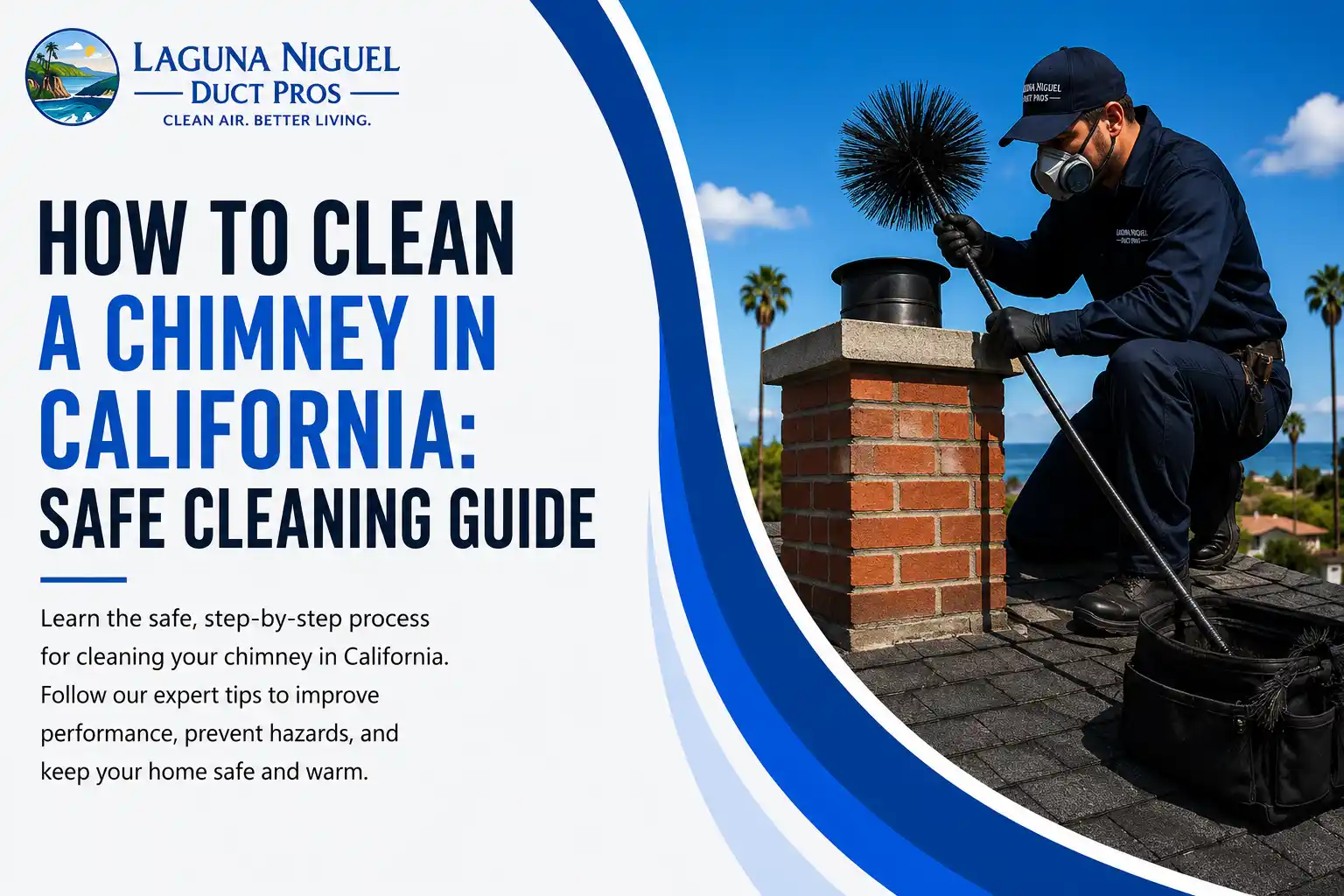
A clean chimney does more than keep your fireplace looking good. It helps your entire heating system work safely and efficiently. If you use a wood-burning fireplace during California’s cooler months, regular chimney cleaning California is one of the most important maintenance tasks you can do. Over time, soot, ash, and creosote buildup collect inside the flue. If these deposits are ignored, they can restrict airflow and increase the risk of a chimney fire. Many homeowners wonder how to clean a chimney in California without damaging the chimney or putting themselves at risk. While some routine maintenance can be done yourself, safe cleaning starts with understanding how your chimney works, what tools you need, and when it’s time to call a professional. In this guide, you’ll learn how to clean a chimney safely in California, how often it should be cleaned, the best ways to remove creosote, and the common mistakes to avoid. Whether you have a traditional fireplace or a modern wood-burning stove, these practical tips will help you protect your home and improve fireplace safety throughout the year. Why Chimney Cleaning Is Important for California Homes Regular chimney maintenance California is about much more than keeping soot out of your fireplace. Every time you burn wood, smoke carries tiny particles into the chimney. As these particles cool, they stick to the inside walls and form creosote buildup. This sticky residue is highly flammable and is one of the leading causes of chimney fires. California homeowners face unique conditions that make routine California chimney cleaning even more important. Dry weather increases fire concerns across many parts of the state, while coastal areas deal with moisture that can slowly damage chimney materials. Regular cleaning and inspections help reduce both risks. Another benefit of routine fireplace maintenance is better indoor air quality. A blocked flue prevents smoke from leaving your home efficiently. Instead, smoke and harmful gases can flow back into your living space, creating unpleasant odors and affecting the air your family breathes. Keeping your chimney clean also improves fireplace efficiency. When airflow is unrestricted, fires burn hotter, cleaner, and produce less smoke. This means less wood is wasted and your fireplace performs the way it was designed. Regular maintenance also allows you to spot problems early. Small cracks in the chimney liner, damaged flashing, or a loose chimney cap are easier and less expensive to repair before they become major structural issues. How California’s Climate Affects Chimney Maintenance California’s climate varies from region to region, but each environment presents different maintenance challenges. In dry inland areas, fireplaces may sit unused for months before being used heavily during winter. Dust, nesting animals, and debris can collect inside the flue during that time. Without proper chimney inspection California, these blockages may go unnoticed until smoke starts backing into the home. In coastal communities, moisture becomes the biggest concern. Salt air and humidity gradually weaken masonry joints and metal components such as the flue liner, chimney cap, and damper. Regular inspections help catch corrosion before it affects chimney performance. Wildfire seasons also make preventive maintenance even more valuable. A clean chimney reduces the chance that sparks or excessive heat inside the flue could contribute to fire hazards. Benefits of Regular Chimney Cleaning Scheduling regular residential chimney cleaning offers several important benefits.First, it helps prevent chimney fires by removing dangerous creosote deposits before they become thick enough to ignite.Second, it improves airflow throughout the chimney system. Better ventilation allows smoke to exit quickly while helping your fireplace burn more efficiently. Routine cleaning also protects expensive chimney components such as the smoke chamber, firebox, chimney flue, and chimney liner, extending the life of the entire system. Finally, annual maintenance provides peace of mind. Instead of wondering whether your chimney is safe every winter, you’ll know it has been cleaned and inspected properly. How Often Should You Clean Your Chimney in California? One of the most common questions homeowners ask is how often should you clean your chimney in California. The answer depends on how often you use your fireplace and the type of fuel you burn. Most experts recommend scheduling annual chimney maintenance at least once every year. Even if you only use your fireplace occasionally, birds, leaves, and debris can block the chimney during the off-season. If you rely on a wood-burning fireplace throughout winter, inspections may be needed more often. A good rule is to have your chimney cleaned whenever creosote buildup reaches about one-eighth of an inch. Recommended Cleaning Frequency Wood-burning fireplaces should typically be inspected every year and cleaned as needed. Since burning wood naturally produces more soot and creosote, these systems require the most attention. Gas fireplaces stay cleaner but still need routine inspections because blockages, damaged venting, or animal nests can interfere with safe operation. Pellet stoves produce less creosote than traditional fireplaces, but ash can still accumulate inside the venting system, making regular maintenance important. Signs Your Chimney Needs Cleaning Even if you follow an annual schedule, there are warning signs that indicate your chimney should be cleaned sooner.Heavy black deposits inside the fireplace often point to excessive chimney soot removal needs.A strong smoky odor, even when the fireplace is not being used, may indicate heavy creosote accumulation. If smoke enters your room instead of rising through the chimney, restricted airflow is often the cause.You should also inspect for visible debris, animal nests, or pieces of masonry that may have fallen into the flue. These issues can prevent proper ventilation and should be addressed before lighting another fire. Recognizing these early warning signs helps keep your fireplace operating safely while reducing the likelihood of costly repairs later. How to Clean a Chimney Safely in California If you’re wondering how to clean a chimney safely in California, the key is to prepare properly and know your limits. Basic chimney cleaning can remove loose soot and light deposits, but heavy creosote removal or structural repairs should always be left to professionals. Before you begin, make sure the fireplace

How Much Does Chimney Sweeping Cost and Cleaning Cost?
Keeping your chimney clean is one of the simplest ways to protect your home and get the best performance from your fireplace. Many homeowners only think about chimney maintenance when they notice smoke, unpleasant odors, or poor airflow. By that point, soot and creosote buildup may already be affecting the system. Understanding chimney sweeping cost and chimney cleaning cost helps you plan for regular maintenance instead of waiting until a small issue becomes an expensive repair. Whether you use a wood-burning fireplace, a gas fireplace, or a stove, routine cleaning keeps your chimney working efficiently while reducing the risk of chimney fires and carbon monoxide problems. The average chimney cleaning cost depends on several factors, including the chimney’s size, accessibility, condition, and whether an inspection is required. Some homes only need a standard cleaning, while others require additional services such as chimney flue cleaning, soot removal, or a detailed chimney safety inspection. In this guide, you’ll learn how much does chimney sweeping cost, what affects pricing, what services are usually included, and why hiring a professional chimney sweep is often the safest and most cost-effective choice. What Is Chimney Sweeping and Why Is It Important? A chimney works as the ventilation system for your fireplace. Every time you burn wood or other fuel, smoke, ash, and tiny particles travel through the flue. Over time, these materials stick to the inside walls of the chimney and form deposits that can restrict airflow and increase fire risks. Chimney sweeping is the process of removing these harmful deposits using specialized brushes, vacuums, and inspection tools. It also allows technicians to identify early signs of damage before they become serious problems. Many homeowners assume that a fireplace is clean simply because it looks clean from the outside. In reality, the inside of the flue is where most problems develop. Regular maintenance keeps the entire system operating safely while improving heating performance. What Does a Professional Chimney Sweep Do? A professional chimney sweep does much more than brush soot from the chimney walls. During a service visit, the technician carefully inspects the entire chimney system to make sure it is safe and functioning properly. A standard service may include: Removing creosote deposits and soot. Performing chimney flue cleaning. Cleaning the smoke chamber. Inspecting the chimney liner for damage. Checking the fireplace damper for proper operation. Looking for cracks, blockages, or signs of moisture damage. Providing a chimney cleaning estimate if repairs are needed. If animals, bird nests, or heavy debris are found inside the chimney, additional cleaning may also be required before the fireplace can be safely used again. Hiring a certified chimney sweep gives homeowners confidence that the work is completed safely and according to industry standards. Benefits of Regular Chimney Cleaning Routine fireplace maintenance offers several important benefits beyond keeping your fireplace clean. One of the biggest advantages is improved safety. Creosote buildup is highly flammable, making it one of the leading causes of chimney fires. Removing it on a regular schedule greatly reduces this risk. Regular cleaning also improves airflow. When smoke can move freely through the chimney, your fireplace burns more efficiently and produces less indoor smoke. Another benefit is preventing expensive repairs. Small cracks, damaged liners, and moisture problems are much easier and less expensive to fix when discovered early during a chimney inspection. Homeowners who invest in annual chimney cleaning often enjoy: Better heating efficiency Cleaner indoor air Reduced smoke odors Longer chimney lifespan Lower long-term chimney maintenance cost How Much Does Chimney Sweeping Cost? One of the most common questions homeowners ask is, how much does chimney sweeping cost? The answer depends on the condition of your chimney and the services included. A standard cleaning usually costs less than a cleaning that requires a camera inspection, heavy creosote removal, or repairs. The average chimney cleaning cost generally reflects the amount of labor involved. A well-maintained chimney usually takes less time to clean than one that has been neglected for several years. When comparing chimney cleaning prices, it’s important to understand what is included in the service. Some companies include a basic inspection with the cleaning, while others charge separately for inspections or additional maintenance. Instead of choosing the lowest price, homeowners should compare the overall value of the service. A thorough inspection can identify problems before they become major repairs, saving money over time. If you’re searching for professional chimney cleaning cost near me, request a detailed quote that clearly explains what services are included. How Much Does Chimney Cleaning Cost for Different Chimney Types? Not every chimney requires the same amount of work. Different fuel types create different cleaning needs. Wood-Burning Fireplaces The chimney cleaning cost for wood-burning fireplace systems is often higher because wood creates more soot and creosote than other fuels. Frequent use may require more regular cleaning. Gas Fireplaces Gas fireplaces burn much cleaner than wood. However, they still require periodic inspections to check for blockages, damaged liners, or ventilation issues. Pellet Stove Chimneys Pellet appliances produce less creosote but still leave ash that must be removed regularly to maintain proper airflow. Masonry Chimneys Older masonry chimneys often require additional attention because bricks and mortar can deteriorate over time. A thorough fireplace chimney inspection helps identify structural problems before they become serious. Metal Chimneys Metal chimney systems are generally easier to maintain, but they still require routine inspections to ensure joints, liners, and caps remain in good condition. What Factors Affect Chimney Sweeping Cost? Several variables influence the final chimney sweep service cost. Understanding these factors helps homeowners know what to expect when requesting a quote. Chimney Height and Accessibility One of the biggest pricing factors is accessibility. A chimney on a single-story home is usually easier and faster to service than one on a multi-story property. Steep roofs, limited roof access, or unusually tall chimneys increase labor time and safety requirements. These conditions often affect the overall chimney sweeping cost because technicians need additional equipment and precautions. Amount of Creosote Buildup The