
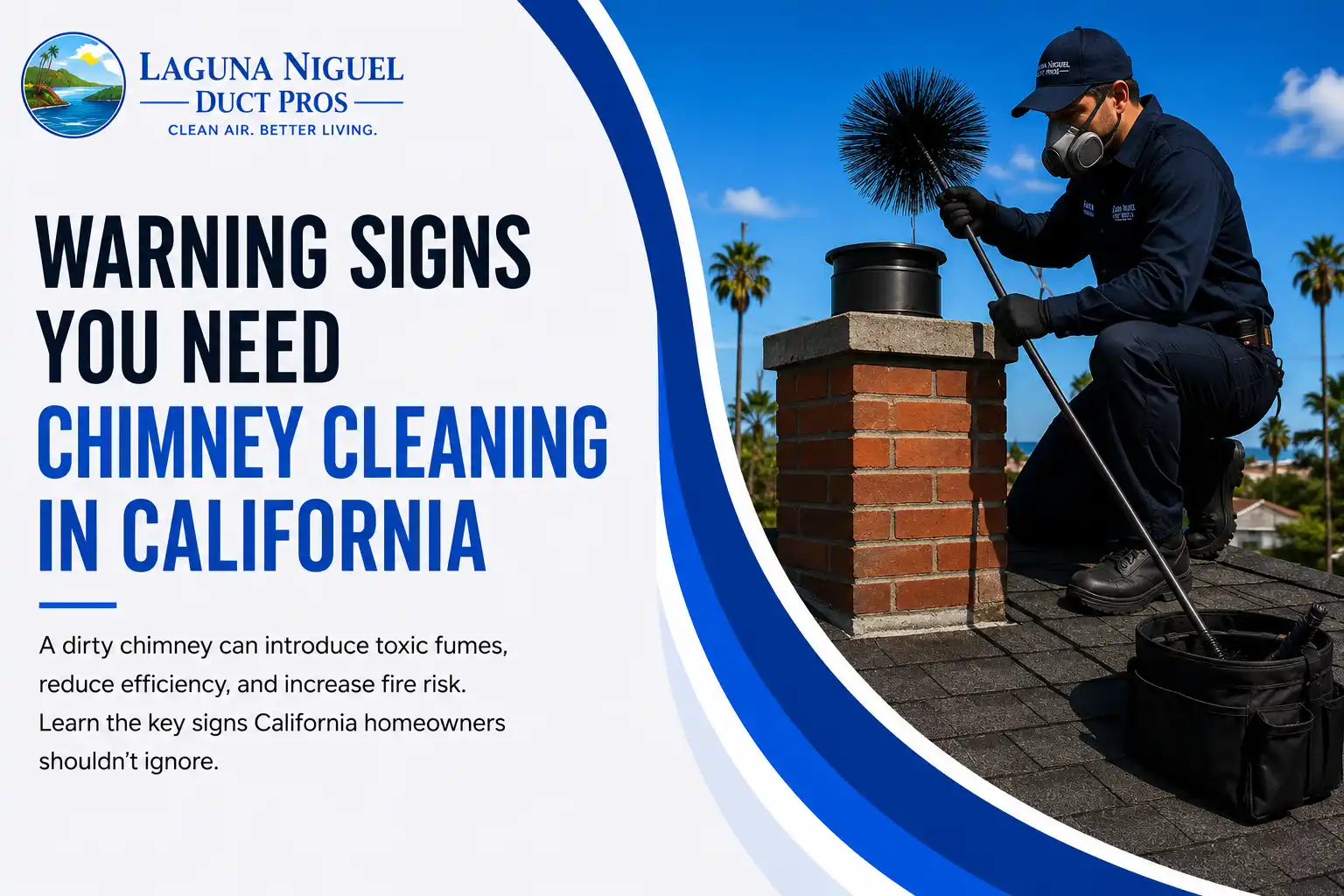
A fireplace adds warmth, comfort, and character to your home, especially during California’s cooler months. However, many homeowners don’t realize that every fire leaves behind soot, ash, and creosote buildup inside the chimney. Over time, these deposits can reduce airflow, affect fireplace performance, and increase the risk of a dangerous chimney fire. Regular chimney cleaning California services are an important part of home maintenance. A clean chimney helps your fireplace burn more efficiently, improves indoor air quality, and reduces safety hazards caused by blocked or dirty flues. Unfortunately, chimney problems often develop gradually, making them easy to overlook until noticeable warning signs appear. Understanding the top warning signs you need a chimney cleaning in California allows you to address issues before they become expensive repairs or serious safety concerns. Whether you use a traditional wood-burning fireplace or another type of fireplace system, routine professional chimney cleaning and a yearly chimney inspection help keep your home safe throughout the heating season. In this guide, you’ll learn how to recognize the most common warning signs, understand why regular maintenance matters, and know when it’s time to schedule a chimney cleaning service. Why Regular Chimney Cleaning Is Important Your chimney is designed to safely carry smoke, gases, and combustion byproducts out of your home. As you continue using your fireplace, soot and creosote naturally collect along the inside of the chimney flue, reducing its ability to vent smoke efficiently. Routine chimney cleaning helps remove these deposits before they become hazardous. Without regular maintenance, even a small amount of creosote buildup can eventually become highly flammable, increasing the risk of a chimney fire. Keeping your chimney clean provides several important benefits: Improves fireplace performance. Supports better indoor air quality. Reduces smoke entering your home. Extends the life of the chimney liner. Prevents costly repairs. Supports overall fireplace maintenance. Annual chimney inspection services are equally important because they identify hidden problems such as cracks, damaged liners, moisture intrusion, or animal blockages that may not be visible from outside the chimney. Professional cleaning also improves the performance of your home’s ventilation system, helping smoke and harmful gases exit your home more effectively. Top Warning Signs You Need a Chimney Cleaning in California Many chimney problems begin with small warning signs that become more noticeable over time. Recognizing these symptoms early can help prevent more serious issues while protecting your family and property. Excessive Creosote Buildup One of the most serious warning signs is heavy creosote buildup inside the chimney. Creosote is a dark, sticky substance created when wood smoke cools inside the chimney flue. Every time you burn wood, a small amount of creosote forms on the flue walls. As the deposits become thicker, they restrict airflow and create a highly combustible surface. There are three stages of creosote accumulation: Light flaky soot Sticky tar-like deposits Thick hardened glaze The later stages are extremely difficult to remove without professional chimney cleaning. Excessive creosote can: Restrict airflow. Produce unpleasant odors. Reduce fireplace efficiency. Increase chimney fire risk. Damage the chimney liner over time. Because creosote is difficult to evaluate without specialized equipment, scheduling routine chimney inspection appointments helps identify dangerous buildup before it becomes a serious hazard. Black Soot Around the Fireplace Another common warning sign is black soot around fireplace openings, fireplace doors, or surrounding walls. Although a small amount of soot is normal, excessive soot usually indicates incomplete combustion or poor ventilation. Heavy soot deposits may result from: Burning unseasoned firewood. Restricted airflow. A dirty chimney flue. Poor fireplace draft. Excessive creosote accumulation. Ignoring soot buildup allows additional residue to collect inside the chimney, making future cleanings more difficult. Professional chimney soot removal removes these deposits while restoring proper airflow throughout the system. If you notice soot accumulating more quickly than usual, it’s a good indication that your chimney should be professionally cleaned before using the fireplace again. Smoke Backing Up Into Your Home Perhaps the most noticeable sign is smoke backing up into the room instead of flowing safely outside. A properly functioning fireplace should immediately draw smoke upward through the chimney. When smoke enters your living space, something is preventing normal airflow. Common causes include: A blocked chimney flue Heavy creosote deposits Debris inside the chimney A damaged chimney cap Poor fireplace draft Animal blockages Besides creating unpleasant odors, smoke introduces fine particles and harmful gases into your home that may affect indoor air quality. If your fireplace suddenly begins producing smoke indoors, discontinue using it until a professional chimney cleaning service can inspect the system. Chimney Smells Like Smoke Even When Not in Use If your chimney smells like smoke during warm weather or when the fireplace hasn’t been used recently, it’s often a sign that creosote and soot have accumulated inside the chimney. Creosote has a strong smoky odor that becomes even more noticeable during humid or rainy conditions. Several issues may contribute to lingering odors: Heavy creosote buildup Moisture inside the chimney Dirty smoke chamber Poor ventilation Restricted airflow Although air fresheners may temporarily mask the smell, they don’t solve the underlying problem. A thorough chimney cleaning removes odor-causing deposits while improving ventilation and fireplace performance. Persistent smoke odors should never be ignored because they often indicate that the chimney needs professional attention before the next heating season. Fireplace Not Drafting Properly If your fireplace not drafting properly, it is one of the clearest signs that your chimney needs attention. A properly functioning fireplace should pull smoke, heat, and combustion gases up through the chimney flue. When the draft becomes weak, smoke can linger inside your home, making fires difficult to maintain and reducing heating efficiency. Several issues can cause a poor draft, including: A blocked chimney flue Heavy creosote buildup A damaged or clogged chimney cap Excessive soot deposits Cold air trapped inside the chimney Structural issues within the ventilation system Ignoring draft problems can lead to poor indoor air quality and increase the risk of carbon monoxide entering your home. A professional chimney inspection can identify the
Professional Air Duct Dryer Vent Chimney | Services
- Sun – Fri: 8:00 AM TO 8:00 PM