
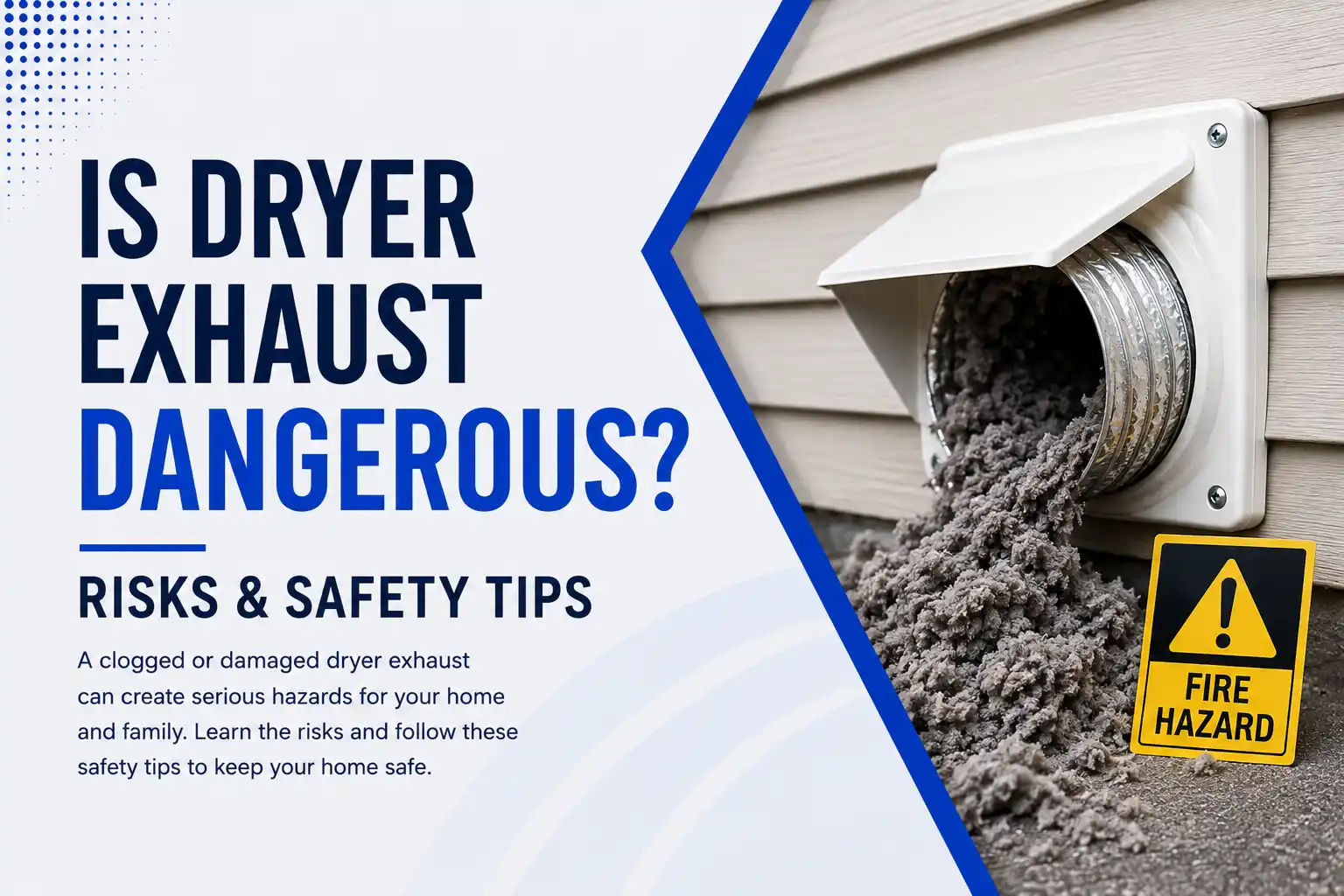
Dryer exhaust is dangerous when the vent is clogged or improperly installed, creating fire risk from lint buildup and, in gas dryers, the risk of carbon monoxide entering your home. Laguna Niguel Duct Pros inspects vent systems across local homes and sees these hazards regularly, almost always in systems that haven’t been cleaned in years. This guide covers the real risks, the warning signs to watch for, and what to do about each one. What Is Dryer Exhaust? Dryer exhaust is the hot, moist air your clothes dryer pushes out through a duct to the outside of your home, carrying lint particles along with it. In a properly working system, this air exits freely through the exterior vent with minimal lint accumulating inside the duct. When the duct becomes restricted, that hot air and lint stay trapped inside the system instead, which is where the danger begins. Why Dryer Exhaust Becomes Dangerous Dryer exhaust becomes dangerous because lint is highly flammable and trapped heat has nowhere to escape once airflow is restricted. Clogged dryer vents are one of the leading causes of home dryer fires, and the risk climbs with every cycle run on a blocked system. Laguna Niguel’s coastal humidity compounds the problem, since damp lint clumps together into a denser blockage than dry lint forms in inland climates. The Hidden Risks of a Clogged Dryer Exhaust Laguna Niguel Duct Pros sees four distinct hazards from restricted dryer exhaust systems. 1. Fire Risk from Lint Buildup Lint ignites easily, and trapped heat inside a blocked duct provides the ignition source. This is the single most serious risk of a neglected dryer vent. 2. Carbon Monoxide Exposure (Gas Dryers) Gas dryers produce carbon monoxide as a byproduct of combustion. A blocked exhaust can push that gas back into your living space instead of venting it outside. 3. Moisture and Mold Problems Trapped humid air can escape into wall cavities through duct gaps, creating conditions for mold growth in places you can’t easily see or reach. 4. Indoor Air Quality Decline Fine lint particles that don’t exit properly circulate back into your home, adding to household dust and affecting air quality for sensitive family members. Warning Signs Your Dryer Exhaust Is Unsafe Clothes take more than one cycle to dry completely The dryer or laundry room feels unusually hot during operation A burning smell appears during a drying cycle Lint collects visibly around the exterior vent opening The exterior vent flap doesn’t open fully when the dryer runs Any one of these dryer vent warning signs is worth acting on immediately rather than waiting for the next scheduled cleaning. Safety Tips to Reduce Dryer Exhaust Risk Clean the lint trap after every single load, without exception Schedule professional vent cleaning at least once a year Never run the dryer while away from home or asleep Check that the exterior vent flap opens freely during operation Replace flexible foil or plastic ducting with rigid metal ducting Regular professional dryer vent cleaning addresses the buildup deep inside the duct that no amount of lint trap cleaning can reach. Common Mistakes That Increase Danger The most common mistake is assuming a clean lint trap means the entire exhaust system is clear, when the trap catches only a fraction of the lint entering the duct. Another common mistake is using flexible plastic or foil ducting, which sags, traps lint in low spots, and is far more flammable than rigid metal. Running the dryer overnight or while nobody is home Ignoring a burning smell as a one-time occurrence Attempting a full duct cleaning with only a household vacuum Overlooking a crushed or kinked duct behind the dryer Comparing professional versus DIY duct cleaning makes the limitation clear: household tools simply can’t reach lint packed deep in a long duct run. General background on how clothes dryers and their exhaust systems function is available on Clothes_dryer, which explains why lint accumulation is an unavoidable byproduct of every drying cycle Cost Factors for Dryer Vent Safety Services Cost depends mainly on vent length, how long it’s been since the last cleaning, and whether repair or ducting replacement is needed alongside cleaning. Factor Lower Cost Range Higher Cost Range Vent length Short, straight duct runs Long runs with multiple bends Time since last cleaning Cleaned within the past year First cleaning in several years Ducting condition Cleaning only Foil or plastic duct replaced with rigid metal Access Ground-level vent exit Roof or second-story vent exit When a system needs more than cleaning, dryer vent repair addresses crushed ducting, poor connections, and damaged exterior vent caps that keep causing repeat blockages. How to Choose the Right Dryer Vent Service Choose a licensed company that inspects the entire duct run and the exterior vent cap, not just the section closest to the dryer. Ask whether they use professional rotary brush equipment sized for your specific vent length and layout. Confirm they check ducting material, not just lint buildup Ask about before-and-after airflow testing Check reviews specific to dryer vent work Get a clear, upfront price before scheduling This overview of a air duct cleaning and repair company covers what separates a thorough safety inspection from a quick surface cleaning. Homeowners also compare experiences on Quora about dryer vent hazards, where the recurring advice is to treat the vent as a fire safety system rather than a routine cleaning chore. Frequently Asked Questions Is dryer exhaust dangerous to breathe? Dryer exhaust venting properly to the outside is not a breathing hazard, but a blocked or leaking vent can push lint particles and, with gas dryers, carbon monoxide back into your home. This is why proper venting and annual inspection matter for indoor air quality. Can a clogged dryer vent cause a fire? Yes, clogged dryer vents are one of the leading
Professional
Air Duct
Dryer Vent
Chimney
|
Services