

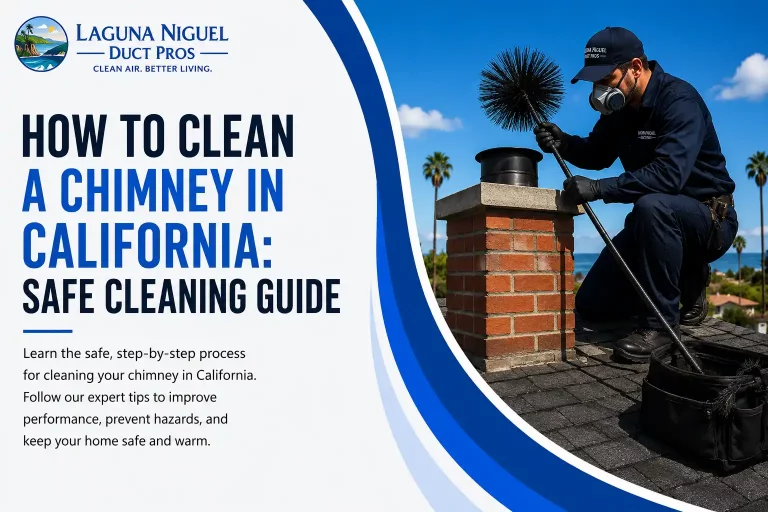
A clean chimney does more than keep your fireplace looking good. It helps your entire heating system work safely and efficiently. If you use a wood-burning fireplace during California’s cooler months, regular chimney cleaning California is one of the most important maintenance tasks you can do. Over time, soot, ash, and creosote buildup collect inside the flue. If these deposits are ignored, they can restrict airflow and increase the risk of a chimney fire.
Many homeowners wonder how to clean a chimney in California without damaging the chimney or putting themselves at risk. While some routine maintenance can be done yourself, safe cleaning starts with understanding how your chimney works, what tools you need, and when it’s time to call a professional.
In this guide, you’ll learn how to clean a chimney safely in California, how often it should be cleaned, the best ways to remove creosote, and the common mistakes to avoid. Whether you have a traditional fireplace or a modern wood-burning stove, these practical tips will help you protect your home and improve fireplace safety throughout the year.
Why Chimney Cleaning Is Important for California Homes
Regular chimney maintenance California is about much more than keeping soot out of your fireplace. Every time you burn wood, smoke carries tiny particles into the chimney. As these particles cool, they stick to the inside walls and form creosote buildup. This sticky residue is highly flammable and is one of the leading causes of chimney fires.
California homeowners face unique conditions that make routine California chimney cleaning even more important. Dry weather increases fire concerns across many parts of the state, while coastal areas deal with moisture that can slowly damage chimney materials. Regular cleaning and inspections help reduce both risks.
Another benefit of routine fireplace maintenance is better indoor air quality. A blocked flue prevents smoke from leaving your home efficiently. Instead, smoke and harmful gases can flow back into your living space, creating unpleasant odors and affecting the air your family breathes.
Keeping your chimney clean also improves fireplace efficiency. When airflow is unrestricted, fires burn hotter, cleaner, and produce less smoke. This means less wood is wasted and your fireplace performs the way it was designed.
Regular maintenance also allows you to spot problems early. Small cracks in the chimney liner, damaged flashing, or a loose chimney cap are easier and less expensive to repair before they become major structural issues.
How California’s Climate Affects Chimney Maintenance
California’s climate varies from region to region, but each environment presents different maintenance challenges.
In dry inland areas, fireplaces may sit unused for months before being used heavily during winter. Dust, nesting animals, and debris can collect inside the flue during that time. Without proper chimney inspection California, these blockages may go unnoticed until smoke starts backing into the home.
In coastal communities, moisture becomes the biggest concern. Salt air and humidity gradually weaken masonry joints and metal components such as the flue liner, chimney cap, and damper. Regular inspections help catch corrosion before it affects chimney performance.
Wildfire seasons also make preventive maintenance even more valuable. A clean chimney reduces the chance that sparks or excessive heat inside the flue could contribute to fire hazards.
Benefits of Regular Chimney Cleaning
Scheduling regular residential chimney cleaning offers several important benefits.First, it helps prevent chimney fires by removing dangerous creosote deposits before they become thick enough to ignite.Second, it improves airflow throughout the chimney system. Better ventilation allows smoke to exit quickly while helping your fireplace burn more efficiently.
Routine cleaning also protects expensive chimney components such as the smoke chamber, firebox, chimney flue, and chimney liner, extending the life of the entire system.
Finally, annual maintenance provides peace of mind. Instead of wondering whether your chimney is safe every winter, you’ll know it has been cleaned and inspected properly.
How Often Should You Clean Your Chimney in California?
One of the most common questions homeowners ask is how often should you clean your chimney in California. The answer depends on how often you use your fireplace and the type of fuel you burn.
Most experts recommend scheduling annual chimney maintenance at least once every year. Even if you only use your fireplace occasionally, birds, leaves, and debris can block the chimney during the off-season.
If you rely on a wood-burning fireplace throughout winter, inspections may be needed more often. A good rule is to have your chimney cleaned whenever creosote buildup reaches about one-eighth of an inch.
Recommended Cleaning Frequency
Wood-burning fireplaces should typically be inspected every year and cleaned as needed. Since burning wood naturally produces more soot and creosote, these systems require the most attention.
Gas fireplaces stay cleaner but still need routine inspections because blockages, damaged venting, or animal nests can interfere with safe operation.
Pellet stoves produce less creosote than traditional fireplaces, but ash can still accumulate inside the venting system, making regular maintenance important.
Signs Your Chimney Needs Cleaning
Even if you follow an annual schedule, there are warning signs that indicate your chimney should be cleaned sooner.Heavy black deposits inside the fireplace often point to excessive chimney soot removal needs.A strong smoky odor, even when the fireplace is not being used, may indicate heavy creosote accumulation.
If smoke enters your room instead of rising through the chimney, restricted airflow is often the cause.You should also inspect for visible debris, animal nests, or pieces of masonry that may have fallen into the flue. These issues can prevent proper ventilation and should be addressed before lighting another fire.
Recognizing these early warning signs helps keep your fireplace operating safely while reducing the likelihood of costly repairs later.
How to Clean a Chimney Safely in California
If you’re wondering how to clean a chimney safely in California, the key is to prepare properly and know your limits. Basic chimney cleaning can remove loose soot and light deposits, but heavy creosote removal or structural repairs should always be left to professionals.
Before you begin, make sure the fireplace has been completely cool for at least 24 hours. Cleaning a warm chimney can be dangerous and may expose you to hot ash or hidden embers. It’s also a good idea to wear old clothing since soot can spread easily and stain fabrics.
Protect the area around your fireplace by laying down drop cloths or plastic sheeting. Close off nearby furniture if possible, and open a window for ventilation. Although you’re cleaning the chimney, fine dust can still become airborne during the process.
Essential Safety Precautions Before Cleaning
Safety should always come first when performing safe chimney cleaning. Wearing the right protective equipment helps reduce exposure to soot and ash.Start with safety goggles to protect your eyes from falling debris. A dust mask or respirator is equally important because soot contains fine particles that you don’t want to breathe. Heavy-duty gloves will protect your hands while working with chimney brushes and metal components.
Tools You’ll Need
Using the correct tools makes clean fireplace chimney maintenance much more effective.The most important tool is a chimney brush that matches the size and shape of your flue. Using the wrong size may leave soot behind or damage the inside of the chimney.Extension rods allow you to reach the full length of the flue, while a sturdy flashlight helps you inspect dark areas inside the chimney.
You’ll also need a fireplace shovel, ash bucket, vacuum with a HEPA filter, protective sheets, and a stiff brush for cleaning the firebox.
As you inspect the system, pay close attention to the damper, flue liner, smoke shelf, and chimney cap. These components work together to keep smoke moving safely out of your home.
Step-by-Step Chimney Cleaning Process
Learning how to clean a chimney in California becomes much easier when you follow a clear process.
Begin by removing any leftover ash from the fireplace. Scoop larger pieces into a metal container before vacuuming the remaining dust.
Next, inspect the inside of the chimney with a flashlight. Look for thick soot deposits, visible cracks, bird nests, or heavy creosote buildup.
Attach the chimney brush to the extension rods and slowly work it through the chimney flue using steady up-and-down motions. Continue brushing until loose soot stops falling into the fireplace.
Once the flue has been cleaned, remove debris from the smoke shelf, which often collects ash and creosote that falls during brushing.
Clean the firebox, wipe down surrounding surfaces, and inspect the damper to ensure it opens and closes smoothly.
Finally, dispose of all ash and soot in a metal container. Never place warm ash directly into a plastic trash bag, as hidden embers can remain hot for several hours.
After cleaning, perform one last inspection to confirm that the chimney is free from obstructions and that airflow is clear.
What Is the Best Way to Remove Creosote from a Chimney?
One of the biggest challenges during chimney cleaning California is dealing with creosote removal. Creosote is a sticky, tar-like substance that forms when wood smoke cools inside the chimney. Over time, it hardens into thick layers that are difficult to remove and highly combustible.
Understanding how creosote develops helps homeowners prevent future buildup and maintain a safer fireplace.
Understanding Creosote Buildup
Every wood-burning fire creates some level of creosote buildup, but several factors can make the problem worse.
Burning wet or unseasoned firewood produces more smoke, which increases condensation inside the chimney. Low-temperature fires also create incomplete combustion, leaving more residue behind.
Poor airflow caused by a blocked chimney flue or partially closed damper can accelerate creosote formation as well.
Creosote generally develops in three stages. The first stage appears as a light, flaky deposit that can often be removed with regular brushing. The second stage becomes thicker and stickier, requiring more effort to clean. The third stage forms a hardened glaze that is extremely difficult to remove without specialized equipment.
The longer creosote remains inside the chimney, the greater the risk of a chimney fire.
Safe Creosote Removal Methods
The best way to remove creosote from a chimney depends on how severe the buildup has become.For light deposits, mechanical brushing with the proper chimney brush is usually enough. This method removes loose residue while protecting the interior surfaces of the chimney.
If thick glaze creosote has formed, professional equipment is usually required. Certified technicians use specialized rotary cleaning systems and commercial-grade tools that safely remove hardened deposits without damaging the flue liner.
Keeping fires hot and burning only dry, seasoned hardwood can also reduce future creosote accumulation and make annual chimney maintenance much easier.
DIY Chimney Cleaning Tips for California Homeowners
Many homeowners successfully perform basic DIY chimney cleaning tips for California homeowners, but it’s important to recognize what you can safely handle yourself.
Routine fireplace maintenance, light soot removal, and visual inspections are generally manageable for most homeowners with the proper equipment.
However, if you discover cracked masonry, damaged chimney liner, excessive creosote buildup, or signs of water damage, it’s time to schedule a professional chimney inspection California.
What You Can Safely Do Yourself
There are several maintenance tasks homeowners can perform between professional visits.
You can remove loose ash after each use, inspect the fireplace before the heating season begins, clean the firebox, and check the chimney cap for leaves or nesting animals.
Looking inside the flue with a flashlight can also help you identify early warning signs before they become expensive repairs.
Regular inspections combined with simple maintenance help improve fireplace safety and keep your system operating efficiently throughout the year.
Common DIY Mistakes to Avoid
Many chimney problems begin with small mistakes that are easy to prevent.
One of the biggest errors is using the wrong size chimney brush, which may leave dangerous deposits behind or damage the flue.
Another common mistake is ignoring the chimney cap. A missing or damaged cap allows rainwater, debris, and animals to enter the chimney, leading to blockages and moisture damage.
Some homeowners also underestimate the importance of protective equipment. Cleaning soot without gloves, eye protection, or a dust mask increases exposure to harmful particles.
Finally, avoid assuming the chimney is safe simply because it looks clean from the fireplace opening. Many hidden issues develop higher inside the flue where they cannot be seen without a proper inspection. Combining routine maintenance with professional evaluations remains the safest approach for long-term home fire safety.
Frequently Asked Questions
Is it safe to clean a chimney yourself?
Yes, basic safe chimney cleaning can be done yourself if you have the right tools, safety equipment, and experience. You can remove loose soot, clean the firebox, and inspect the chimney for visible debris. However, if you notice heavy creosote buildup, damaged masonry, or problems with the flue liner, it’s best to hire a certified chimney sweep to ensure the chimney is cleaned safely and thoroughly.
How often should you clean your chimney in California?
Most experts recommend annual chimney maintenance, even if you don’t use your fireplace often. If you regularly burn wood during the colder months, you may need more frequent chimney cleaning California services. A chimney should also be cleaned whenever creosote buildup reaches about one-eighth of an inch or if you notice poor airflow or smoke backing into your home.
What causes creosote buildup inside a chimney?
Creosote buildup forms when smoke cools and sticks to the inside of the chimney flue. Burning wet or unseasoned wood, having poor ventilation, or burning low-temperature fires can speed up the process. Regular fireplace maintenance, using dry hardwood, and scheduling routine inspections help reduce creosote accumulation and lower the risk of chimney fires.
What are the signs that my chimney needs cleaning?
Some common signs include excessive soot around the fireplace, a strong smoky smell, smoke entering the room instead of rising through the chimney, and reduced fireplace performance. You may also notice black, sticky deposits inside the flue or debris falling into the fireplace. These signs indicate it’s time for chimney soot removal and a chimney inspection California.
Why should I hire a professional chimney cleaning service?
While basic maintenance can be done yourself, professional residential chimney cleaning provides a deeper inspection of the entire system, including the chimney cap, damper, smoke chamber, and flue liner. Professionals can safely perform creosote removal, identify hidden damage, and help prevent chimney fires, giving you peace of mind before using your fireplace.